
SUSTAINABILITY REPORT 2025
Environment
ENVIRONMENTAL PERFORMANCE
Management approach
The company integrates environmental management into its operations; to this end, 86% of its own operations (factories over which it has financial control) are certified to the ISO 14001 standard. This percentage rises to 78% if we include all factories within the scope of this Report. The company’s inorganic growth means that new plants are progressively being added to this certification.
The roll-out of the Sygris SGI tool as a means of monitoring and measuring relevant environmental data and information continues to progress, with the Laser, GMH and Hidria division plants now reporting via this system this financial year. Defining improvement measures for reporting and ensuring the reliability of Sygris data are the objectives set out within the framework of the SGI. Overall, Gonvarri continues to improve in monitoring the environmental impacts arising from its activities, identifying opportunities for improvement.
In the Solar Steel division, we hold EN 1090-1 certification for Factory Production Control (FPC). This certification guarantees compliance with the European regulatory framework and the correct application of the CE marking, ensuring controlled and traceable processes that reinforce product safety, structural reliability and accountability for declared performance, whilst promoting durability, the efficient use of materials and the reduction of faults, rework and premature replacements, minimising indirect environmental impacts throughout the life cycle and integrating good governance through control, audit and continuous improvement requirements.
Within the GMS division, Gonvarri Asturias and Çepaş holds EN ISO 3834-2:2021 certification (comprehensive welding quality with control of materials, equipment, competencies and traceability) and EN 10219- 1:2006 certification (conformity assessment and structural performance of cold-formed hollow sections), reducing defects, rework and waste, improving efficiency in the use of resources, promoting safer and more controlled working environments, and reinforcing auditable and traceable technical governance, with direct benefits in terms of durability and the reduction of indirect environmental impacts (materials, transport and end-of-life).
Within the GMH division, the Dexion GmbH plant in Laubach (Germany) has an energy management system certified to ISO 50001:2018. This certification directly reinforces sustainability by structuring the identification of significant energy consumption and its control through indicators, operational controls and internal audits, thereby reducing deviations, inefficiencies and unnecessary consumption. In doing so, it drives the continuous improvement of energy performance, contributes to the reduction of associated emissions and consolidates traceable, data-driven management, aligned with the Group’s ESG strategy on decarbonisation, climate change mitigation and the efficient use of resources.
Meanwhile, within the Asia division, the Chinese subsidiary VAMA Gonvarri Advance Automotive Steel Solutions (Changshu) Co., Ltd. has obtained carbon neutrality certification in accordance with certificate CBC PJ/GHG 20250408001, following the quantification and verification of emissions in accordance with ISO 14064-1:2018 and the achievement of neutrality in accordance with PAS 2060 through the full offsetting of emissions using VCS credits from a wind power project.
In addition to the management approach, the Carbon Neutral Plan 2030–2050 stands out, with the aim of transforming Gonvarri Industries into a climate-neutral company by 2050. To this end, the Plan sets a 2030 target aimed at reducing the company’s direct and indirect emissions, with a view to contributing to the Paris Agreement’s ambition of limiting global warming to 1.5°C above pre-industrial levels. In relation to the Carbon Neutral Plan, the sections on energy consumption, energy efficiency and greenhouse gas emissions provide further detail on the measurement, monitoring, implementation and governance of the plan.
With regard to potential environmental risks and to cover their occurrence, we have made financial provisions and have guarantees in place to cover the occurrence of these risks under the insurance policies we have taken out, with cover of up to €20 million:
SUSTAINABILITY REPORT 2025
- Environmental Liability Insurance
- Civil Liability Cover for Sudden and Accidental
Pollution under the General Civil Liability policy.
During 2025, the Group’s Environmental Liability Policy was activated on two occasions. These two events are described in the Land section of this chapter.
Resources, provisions and guarantees allocated to environmental prevention
The net book value of environmental fixed assets amounted to €9,497k at the end of the 2025 financial year (€10,427k in 2024).
Expenditure incurred on environmental protection and prevention amounted to €2,215k in 2025 (€1,606k in 2024).
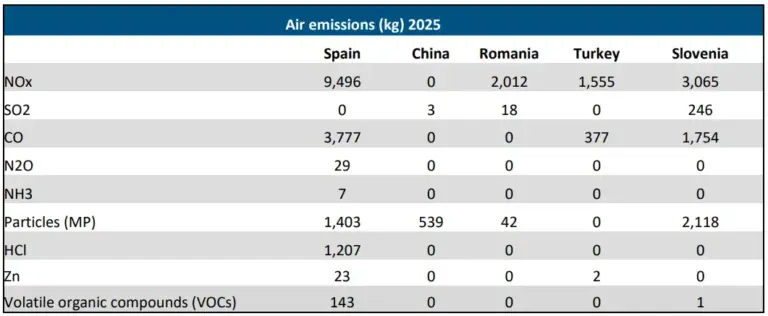
Air emissions
With regard to emissions from other sources, these mainly affect factories carrying out surface treatments, for example: steel pickling, galvanising, electro-zincing, degreasing, painting, etc. These factories account for 23% of the plants included in the report.
These types of emissions are monitored periodically, always by an accredited body, in accordance with integrated environmental authorisations or other licences that form the basis of the legal requirements in this area.
Air emissions are determined by the type of emission. The categories are divided into:
- Combustion emissions: these are sources of emissions resulting from the combustion of natural
gas or propane. These sources only require control of the combustion process to optimise
combustion efficiency. - Acid emissions: these are sources resulting from the fumes emitted during steel pickling or
electro-zinc plating processes. These sources are equipped with wet scrubbers that dilute and
minimise emissions. - Dust emissions: these are sources mainly located in galvanising lines where dust is emitted by
immersing steel in molten zinc baths. These sources are equipped with bag filters that capture
the finest dust particles.
Circular Economy: raw materials and waste
Against a backdrop of growing regulatory and market demands regarding the circular economy, traceability and transparency of environmental information, Gonvarri Industries actively monitors developments in standards, frameworks and data-sharing tools throughout the value chain. This analysis includes, amongst other initiatives, developments linked to the Digital Product Passport, which are particularly relevant in certain sectors, with the aim of anticipating implications and defining proportionate and consistent approaches.
In parallel, and as part of the integration of the circular economy as one of the key priorities of the Group’s environmental strategy, the company is strengthening data quality and its measurement capabilities by defining new indicators and reviewing reporting processes. This approach lays the foundations for meeting future traceability and verification needs, in line with the expectations of customers and other
stakeholders.
The incorporation of the circular economy as a strategic pillar pursues three main objectives:
- To improve environmental performance by reducing the impacts associated with the use of materials, waste generation and indirect emissions.
- To respond to the growing regulatory framework in areas such as waste management, packaging and the efficient use of resources.
- To strengthen reporting, considering the circular economy as a material aspect of Gonvarri Industries’ operations.
Within this framework, and as part of the Integrated Management System, the Group has defined new indicators that will begin to be implemented in 2026, with the aim of improving data quality and the ability to monitor performance in relation to the circular economy.
Defined indicators
Within this framework, Gonvarri Industries has defined new indicators aimed at improving the measurement and management of the use of key materials and consumables, the implementation of which will begin progressively from 2026.
Packaging
Indicator of packaging material consumption per unit of product delivered, which will enable the assessment of trends in the use of these materials and progress towards reducing their environmental impact.
Hydraulic oil and lubricants
Indicator of the percentage of regenerated or recycled hydraulic oil and lubricants out of the total consumed, aimed at measuring the extent to which used oil is reused and promoting practices aligned with the principles of the circular economy.
Action plan and targets
The roll-out of these indicators is being implemented progressively, with the aim of first consolidating data quality and subsequently moving towards the definition of corporate targets:
2026: monitoring of indicators and analysis of their evolution across the Group’s various operations.
2027: definition of improvement targets at plant level and implementation of specific initiatives.
2028: Gonvarri Industries will have two corporate targets for reducing the specific consumption of critical
consumables:
- a target to reduce packaging material consumption per unit of product delivered, and
- a corporate target to maximise the percentage of regenerated or recycled hydraulic oil and lubricant
out of the total consumed.
Waste management
Non-hazardous waste
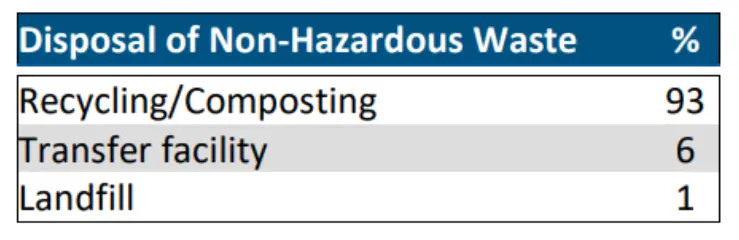
In 2025, a total of 365 kt of non-hazardous waste was generated, mainly associated with steel processing, of which scrap metal accounted for 96% (351 kt), whilst the remaining 4% (13.8 kt) consisted of packaging, organic waste, construction waste, shot blasting dust and welding flux.
Hazardous waste
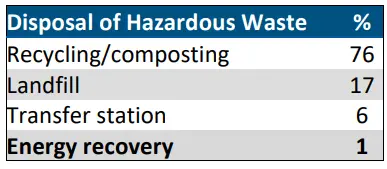
In 2025, 22.8 kt of hazardous waste was generated, mainly in factories carrying out galvanising, pickling and/or painting processes. Ferrous chloride from pickling is the main hazardous waste. Improper handling of this waste could lead to environmental risks (e.g. soil or water contamination), mitigated by the prevention, recovery and control measures implemented. 100% of this waste is managed and disposed of through authorised waste management companies and transporters in each country.
Waste recovery and resource optimisation
Gonvarri Industries implements initiatives aimed at reducing, reusing and recovering waste, with a particular focus on those waste streams with the greatest environmental impact arising from its industrial processes.
In this context, a research project has been carried out, in collaboration with public institutions, focusing on the recovery of spent acids generated during pickling and galvanising processes. The results obtained demonstrate the technical feasibility of recovering ferrous salts and reusing hydrochloric acid, as well as separating and recovering iron and zinc salts from waste that is currently sent to landfill. In a subsequent phase, the economic viability of its potential industrial implementation is being analysed.
In addition, technical solutions have been incorporated at certain facilities to reduce liquid waste, using wastewater and coolant evaporation systems, which enable a reduction in volumes managed externally and promote the reuse of water in internal processes, under analytical control.
Complementarily, and in line with the European Commission’s Circular Economy Action Plan and the Spain Circular 2030 Strategy, Gonvarri Industries is developing initiatives for waste prevention and material optimisation at source, including the improvement of packaging, the phasing out of single-use materials, and the implementation of reusable or returnable systems, always in accordance with customer technical specifications.
Furthermore, practices for the reuse and recovery of materials are applied, such as the return and reuse of pallets, the reuse of metal and cardboard packaging and, in certain sites, the implementation of management systems geared towards ‘zero waste’ models, in accordance with applicable regulations.
These actions contribute to reducing the waste generated and diverting waste from landfill, reinforcing the preventive and recovery-focused approach adopted by Gonvarri Industries in waste management, in line with the GRI 306-2 standard.
Packaging in Spain
Royal Decree 1055/2022, of 27 December, is a key piece of legislation within Spain’s Circular Economy package. It sets targets for waste prevention, encourages bulk sales, promotes the recyclability of all packaging by 2030 (and, where possible, its reusability) and establishes the extended producer responsibility scheme, under which companies must bear the cost of managing the packaging waste they place on the market.
Single-use packaging
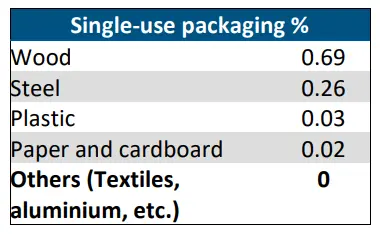
The implementation of this legislation has led Gonvarri Industries to publish annual company-specific declarations in 2021, 2022, 2023, 2024 and 2025, detailing the composition of the packaging placed on the market. The 2025 declaration is an estimate, as it is used to calculate the collective extended producer responsibility scheme quota. This quota will be adjusted at the end of the year when the final total of packaging placed on the market is determined. 96% of the materials comprising single-use packaging are steel and wood. Both materials are fully separable; furthermore, steel is 100% recyclable, whilst wood is a reusable and/or recoverable material.
In those areas of activity where materials of forest origin are used, the company promotes the use of FSC (Forest Stewardship Council)-certified wood as an expression of its commitment to responsible resource management. This certification provides guarantees regarding the responsible sourcing of the wood and its traceability throughout the supply chain, promoting practices compatible with the conservation of forest ecosystems and the protection of biodiversity. In this way, the organisation integrates environmental criteria into its procurement decisions and reinforces a procurement management approach aligned with its sustainability commitments.
Returnable packaging
Gonvarri is working to increase the proportion of returnable packaging, with the primary aim of reducing timber consumption. Various packaging return and deposit return schemes (DRS) are being developed to ensure the lowest possible environmental impact, taking into account the product’s entire life cycle.
Water and effluent
At Gonvarri Industries, with the exception of certain production processes, the activities carried out in the factories do not require intensive water use, which generally results in low consumption levels.
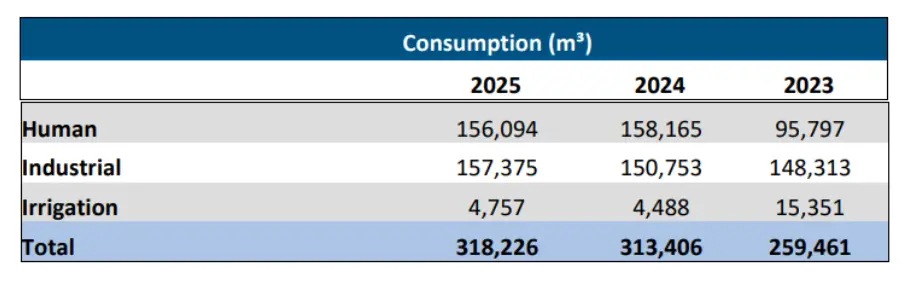
In 2025, the Group’s total water consumption increased by 2% compared to the previous year. As for its source, 91% of the water consumed came from the mains supply and 9% from groundwater sources. In terms of usage, consumption was industrial (49.5%) and domestic (49%), whilst irrigation accounted for a residual percentage (1.5%).
The volume of water reused in 2025 amounted to 4,350 m³, a level in line with that recorded in 2024.
Reuse is mainly concentrated in the pickling and galvanising processes, and the objective for the coming years is to progressively extend the reporting of this indicator to all factories that carry out these processes.
Furthermore, in accordance with the criteria established in GRI indicator 306-5, no significant impact on water sources has been identified as a result of the company’s water abstraction.
Target
Gonvarri Industries has set a target that, by 2030 at the latest, 100% of its plants where water is a significant environmental issue will have a target for improving water performance and an associated action plan, aimed at reducing water abstraction and/or increasing water reuse or recirculation.
Soil
Preventing soil contamination is an important aspect of the company’s environmental management. The group’s factories have the instructions and resources to act swiftly in the event of any incident and carry out awareness-raising activities to educate all employees.
Furthermore, they monitor and report any spills or leaks that occur, describing the incident and the actions taken.
In 2025, two isolated environmental incidents were recorded at the Group’s facilities. In Germany, a limited oil spill occurred in a technical room, which was fully contained within the facility, with no impact on the surrounding environment. The relevant authorities were informed and the incident was managed in a coordinated manner, without resulting in any penalties. In Brazil, a fire in the pickling area of an industrial plant caused, during fire-fighting operations, a temporary alteration in the water quality of a nearby watercourse. The incident was reported to the environmental authority and managed in
coordination with it through the activation of emergency protocols and the immediate adoption of measures for containment, neutralisation and waste removal. In both incidents, the impacts were isolated and controlled; corrective and preventive measures were adopted, and no persistent environmental effects were recorded.
Noise
In general, external noise is not a significant impact at Gonvarri Industries’ factories. Most are located in industrial estates, away from urban areas, which minimises this impact. Furthermore, all facilities are equipped with sectional, roller or fixed doors featuring automatic closing mechanisms that prevent noise
emissions to the outside, as well as soundproof enclosures on those parts of the production lines where the highest noise levels occur, to protect workers (in addition to the use of appropriate hearing protection PPE in each case).
All factories produce their corresponding external noise reports at the intervals specified in their environmental licences and/or environmental impact assessments and/or the country’s local legislation.
Furthermore, to minimise the noise impact of transporting raw materials and finished products by lorry, special care is taken with the established loading and unloading schedules.
Should any non-compliance be detected, appropriate corrective measures are implemented within the framework of the Integrated Management System.
Light pollution
The impact associated with light pollution is not considered significant at Gonvarri Industries. The Group’s operations take place in established industrial environments, and the lighting systems at the facilities comply with the applicable regulatory requirements in each country, focusing on meeting operational and safety needs.
In this context, no significant environmental impacts arising from the external lighting of the facilities have been identified.
Biodiversity
All of Gonvarri Industries’ production plants are located in industrial zones classified in accordance with land-use regulations, with no presence in protected areas or areas of high biodiversity value.
Consequently, the direct impact of the Group’s activities on biodiversity and ecosystems is not considered material.
However, Gonvarri Industries monitors the regulatory framework and best practices in this area, integrating environmental considerations into the management of its facilities and the planning of new sites, with the aim of preventing potential impacts and ensuring compliance with applicable standards.
Energy information
Energy consumption
Internal energy consumption
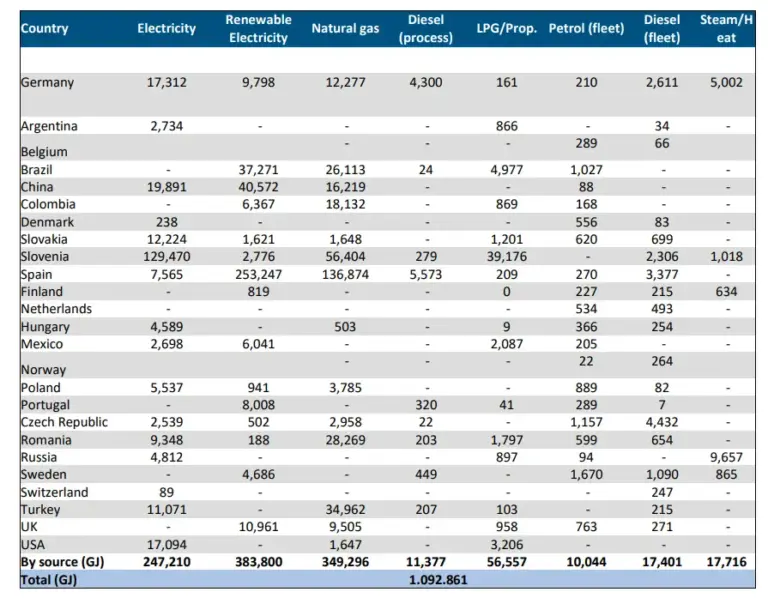
In 2025, Gonvarri Industries maintained a rigorous focus on monitoring and reducing energy consumption, in line with the principles of energy efficiency and sustainability. The breakdown of internal energy consumption by source was as follows:
- Electricity: 57.7%
- Fossil fuel: 40.7%
- Steam/Heat: 1.6%
Compared with the previous year, total energy consumption fell by 1%. This decrease is mainly due to a reduction in fossil fuel consumption (-5%), which was offset by an increase in the use of electricity (+2%) and steam (+11%).
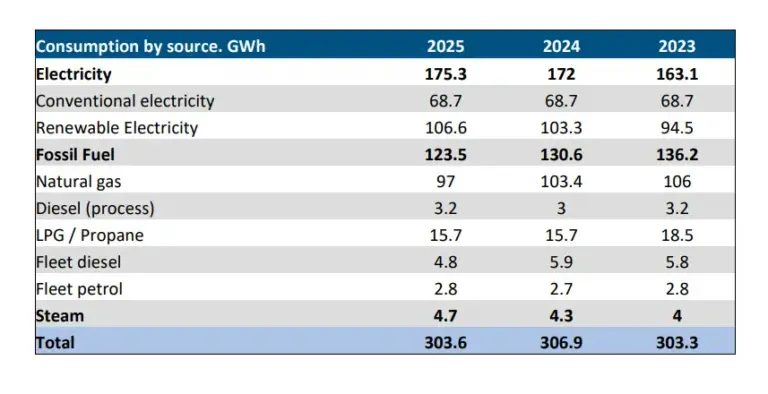
Efficient energy management is key for Gonvarri Industries, contributing to the reduction of environmental impact and compliance with the Carbon Neutral Plan, reaffirming the company’s commitment to sustainability.
Table. Energy consumption in gigajoules (GJ)
External energy consumption
At the time of writing this report, external energy consumption data for the 2025 financial year is not yet available. However, data for the 2024 financial year is available, having been derived from the information used to calculate the Scope 3 categories of the Group’s greenhouse gas inventory.
The company will continue to work on improving the availability and traceability of this information with the aim of standardising its reporting in future financial years.
Energy consumption from renewable sources
In 2025, 36% of the Group’s total energy consumption came from renewable sources, including electricity and steam or heat from renewable sources.To understand this progress, it is key to distinguish the proportion of purchased energy in the Group’s consumption. Purchased energy refers to electricity, heat, steam or cooling acquired from external sources, with its emissions accounted for as Scope 2.
During the 2025 financial year, purchased energy accounted for 59% of total energy consumption, of which 60% was from renewable sources.
Electricity
At the end of 2025, 61% of the Group’s electricity consumption came from renewable sources. This percentage was achieved through a combination of:
- certified renewable electricity, used at 32 sites, and
- self-consumed solar photovoltaic power, with 20 installations in operation and self-consumed production exceeding 12 GWh, reinforced in 2025 with new plants at Gonvarri Asturias, Senica, Laubac and Popes Lane.
Steam and heat
In 2025, 29% of the steam and heat consumed by the Group came from renewable sources. Of particular note is the GMH plant in Laubach (Germany), where 100% of the steam consumed is generated from biomass.
This progress reinforces the Group’s path towards the goal of achieving net-zero Scope 2 emissions by 2030.
Energy intensity
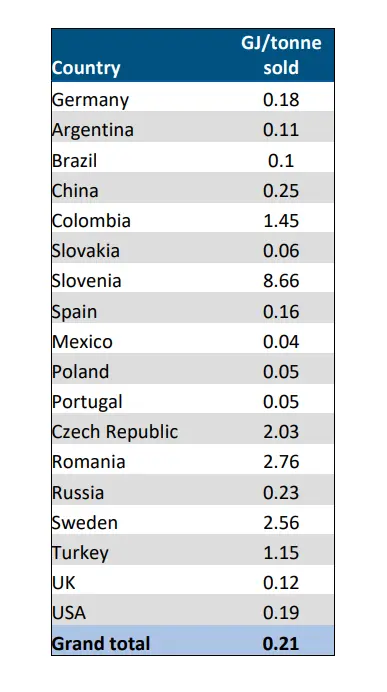
The energy intensity metric allows for a comparison of energy consumption efficiency across processes.
The calculation takes into account total energy consumption (electricity, fossil fuels and steam/heat) and tonnes sold in 2025.
Table. Energy intensity in GJ/tonne sold by country.
Energy Efficiency
As part of its commitment to sustainability and as a fundamental pillar of the Carbon Neutral Project, Gonvarri continues to work towards maintaining highly efficient production through the energy optimisation of all its processes, production lines and auxiliary equipment, striving at all times to achieve maximum production rates with the lowest possible energy costs, minimising the use of fossil fuels whilst maintaining high standards of quality.
To meet this objective, the ECO-ENERGY project has been underway since 2015, with the following main objectives:
- Implementation of an energy management and monitoring system across the company’s
various plants. - Identifying and implementing energy-saving improvements to reduce, in particular, the
consumption of gas, other fossil fuels, electricity and water. - Decarbonisation of the various production processes to achieve the company’s emissions
reduction targets.
Currently, 19 of the group’s plants are being monitored, and further progress is expected in the coming years, both in terms of the number of plants monitored and the potential and functionalities of the energy management system.
The aim of monitoring and controlling overall consumption of gas, electricity and water, as well as consumption across all production lines, main motors, compressors, lighting, boilers, industrial furnaces, air conditioning, refrigeration systems, etc., is to:
- To carry out detailed monitoring of the specific consumption of production lines and auxiliary
equipment, thereby ensuring their proper functioning and operation. - To analyse and study consumption at the facilities in order to identify opportunities for energy
improvement and optimisation that will reduce both energy consumption and costs, as well as
the emissions associated with the processes.
With regard to energy-saving measures and the reduction of tonnes of CO₂ emitted into the atmosphere, we work year after year to exceed the targets set at the start of the project.
During 2025, various projects have been studied and analysed to reduce energy consumption and CO₂ emissions from our facilities, with particular emphasis on those projects involving the elimination or significant reduction of fossil fuel use (NG and propane) in our processes.
Throughout the year, nine energy efficiency projects were implemented, six focused on reducing the consumption of fossil fuels (NG and propane) and the other three focused entirely on reducing electricity consumption.
These projects have been carried out across 9 factories and 6 divisions of the Group (Hidria, E&A, GMS, Precision Tubes, GMH, Gonvauto), reflecting the commitment of each and every division to achieving the company’s decarbonisation targets and continuing to work on improving and reducing the energy consumption of our processes.
All these improvements will result in a reduction in total energy consumption of over 4 GWh/year (14,400 GJ) and a reduction in emissions of 1,229 tCO₂/year.
Of this reduction in energy consumption, 48.7% relates to natural gas, 47.2% to propane and 4.1% to electricity, with improvements having been made to aluminium smelting furnaces, galvanising furnaces, air conditioning systems, pickling lines, profiling lines, stacking systems and compressed air production
equipment.
With these improvements, there are now 122 energy efficiency projects and measures recorded since the ECO-ENERGY project began, achieving an annual energy saving of over 30 GWh (108,000 GJ), representing a reduction in the group’s energy consumption of more than 9%.
Among the measures implemented in 2025, the following are particularly noteworthy: the replacement of the old JASPER furnace at Koper-Alutec with the new STRIKO 2500/4000 (with a potential reduction of 40% in propane consumption, 50% in scrap generation and 30% in electricity consumption), the
improvement to the combustion system of the ÇEPAS galvanising furnace (a 9% reduction in natural gas consumption, 50% in electricity consumption and over 5% in zinc consumption) or the electrification of the degreasing tanks on the Valencia cleaning line, where two natural gas burners have been replaced by two electric heating elements that allow the tanks to be heated using surplus energy from the plant’s solar photovoltaic self-consumption system.
Its strong commitment to the Carbon Neutral Plan means that the company is constantly seeking and investing in the most efficient solutions and technologies for its processes, enabling it to minimise its energy consumption and CO₂ emissions.
Solar structures
Through its subsidiary Solar Steel, Gonvarri manufactures and supplies solar structures, mainly fixed and single-axis trackers (TracSmarT+ 1V DR, TracSmarT+ 2V, TracSmarT+2V Compact and RackSmarT), which form part of photovoltaic farms for the generation of renewable energy.
In 2025, solar structures were supplied to 9 countries. By estimating the net hours of solar radiation per project and the emission factor applicable to each country, a total of 1,081,973 tonnes of CO₂ were indirectly avoided in 2025.
Information about GHG emissions
CO₂ emissions are calculated in accordance with the principles and methodologies of the GHG Protocol and the 2006 IPCC Guidelines for National Greenhouse Gas Inventories, using annually updated emission factors and the organisation’s activity data.
Information on greenhouse gas emissions forms the cornerstone of the company’s decarbonisation plan.
The inventory covers all the group’s activities, across all countries, all energy sources and all greenhouse gases present within the company.
Scopes 1 and 2
Scope of the greenhouse gas inventory
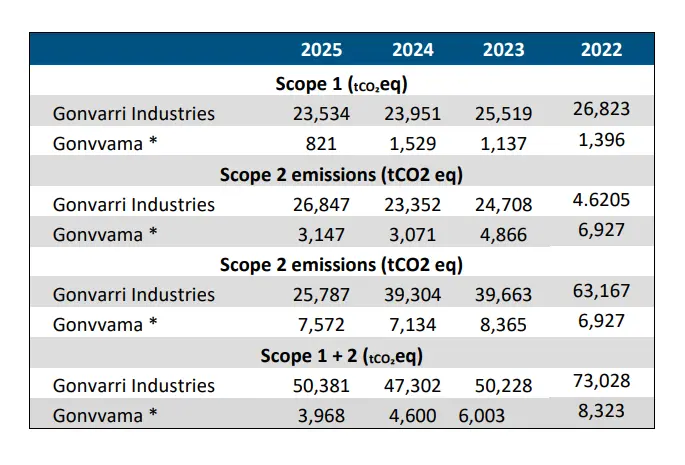
The scope of Gonvarri Industries’ greenhouse gas (GHG) inventory has been defined in accordance with the financial and operational control approach, in line with the criteria established in the GHG Protocol and the GRI 305 standard.
Under this approach, the inventory includes, under Scopes 1 and 2, emissions associated with the Group’s own operations over which Gonvarri exercises financial control, as well as those operations under its operational control. In accordance with this criterion, emissions corresponding to the Vama Gonvarri Automotive Solutions Group are not included in Scopes 1 and 2 and are reported as a financial investment under Scope 3, category 14.
The greenhouse gases included in the inventory are: CO₂, CH₄, N₂O, HFCs, HCFCs and SF₆, in accordance with the scope defined by the Kyoto Protocol and the GHG Protocol.
Direct emissions (Scope 1) stem mainly from the combustion of fossil fuels—natural gas, liquefied petroleum gases and diesel—in production processes, as well as from fuel consumption by the corporate vehicle fleet.
Indirect emissions (Scope 2) relate to the consumption of electricity and the purchase of steam used at the Group’s facilities.
Emissions intensity
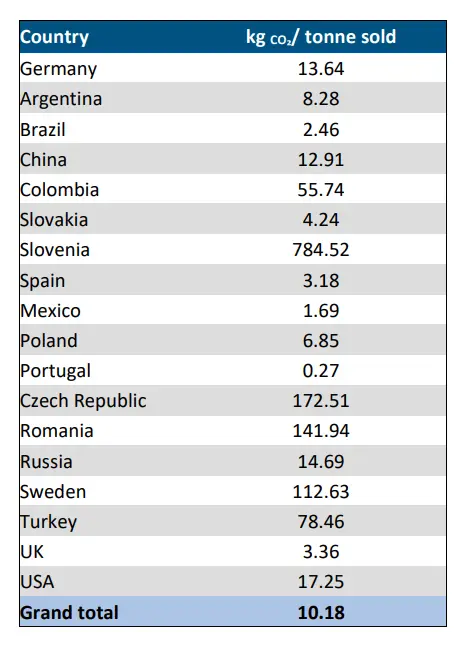
Gonvarri considers emissions intensity to measure the efficiency and impact of its processes. The resulting ratio is calculated by dividing direct and indirect emissions (305-1 and 305-2) by the total weight of products sold in each country. The following table details the results obtained in 2025:
Carbon Neutral Plan
Objectives
The Carbon Neutral Plan sets the objective for Gonvarri Industries to become a climate-neutral company by 2050. As an intermediate step, the Group has set targets for 2030 to reduce its emissions, aligned with the 1.5°C target of the Paris Agreement.
With 2022 as the base year and a global scope, the 2030 targets are:
- To reduce Scope 1 emissions by 50%.
- Ensure that 100% of purchased energy comes from renewable sources.
2022 was selected as the base year as it was the first post-pandemic financial year in which the Group fully resumed operations across all divisions and because complete, high-quality emissions inventories were available.
In 2025, the Group achieved an energy intensity of 57 kWh per tonne sold and an emissions intensity of 10.18 kg of CO₂ per tonne sold, as a result of the energy mix used in its operations.
Electricity accounts for 58% of total energy consumption — of which 61% is from renewable sources — whilst 42% comes from fuels. Since the base year, the Group has made progress in the electrification of its energy mix, increasing the share of electricity by five percentage points.
The Group’s strategy is based on three lines of action: improving process efficiency, increasing the use of renewable electricity, and advancing the electrification of processes currently based on fuels.
2025 performance in reducing emissions from own operations
In 2025, Gonvarri Industries has continued to make progress in reducing emissions associated with its factories, in line with the targets set out in the Carbon Neutral Plan.
Regarding Scope 1 emissions (including Gonvvama), the Group achieved a 4% reduction compared to 2024 and a 14% reduction compared to the 2022 baseline year, exceeding the Plan’s interim target for 2025, set at a 12% reduction.
As for Scope 2 emissions (including Gonvvama), 61% of the electricity consumed in 2025 was from renewable sources and 29% of the heat and steam was from renewable sources, resulting in total emissions of 29,994 tCO₂e. This performance reinforces progress towards the Carbon Neutral Plan’s target
of achieving net-zero Scope 2 emissions by 2030.
Steel. Raw material emissions.
The Carbon Neutral Plan does not focus solely on reducing emissions from the Group’s own operations, but also addresses the impact associated with the materials processed by Gonvarri Industries, particularly steel.
Steel is the main source of emissions throughout the Group’s value chain and is therefore a key area for action from a climate perspective. In this context, Gonvarri Industries is developing internal capabilities and working with its supply chain to move towards the use of materials with a lower carbon footprint.
The Group is cautiously exploring the possibility of setting a specific target regarding emissions associated with steel, the formalisation of which will depend on market developments and the availability of reliable information from suppliers.
As part of this approach, the Group is strengthening the generation of reliable and comparable environmental information on steel products, with Environmental Product Declarations (EPDs) being one of the main lines of work in this area.
Environmental Product Declarations (EPDs) and Eco-labelling
In 2025, Gonvarri Industries has made progress in the eco-labelling of low-emission steel solutions by preparing Environmental Product Declarations (EPDs) in accordance with ISO 14025 and the PCRs based on EN 15804+A2, ensuring a consistent, transparent and verified calculation of environmental impacts
throughout the life cycle.
The first EPDs have been developed at Gonvarri Barcelona, for galvanised coils, and at Gonvarri Asturias, for crash barriers and road safety terminals.
The environmental performance of these products is underpinned by the purchase of low-emission steel, the use of 100% renewable electricity (Scope 2 neutrality in the Iberian Peninsula from 2022), the application of circular economy principles in pickling and galvanising processes, and the optimisation of
logistics and local sourcing to reduce transport-related emissions.